The Most Distracting Place on Earth

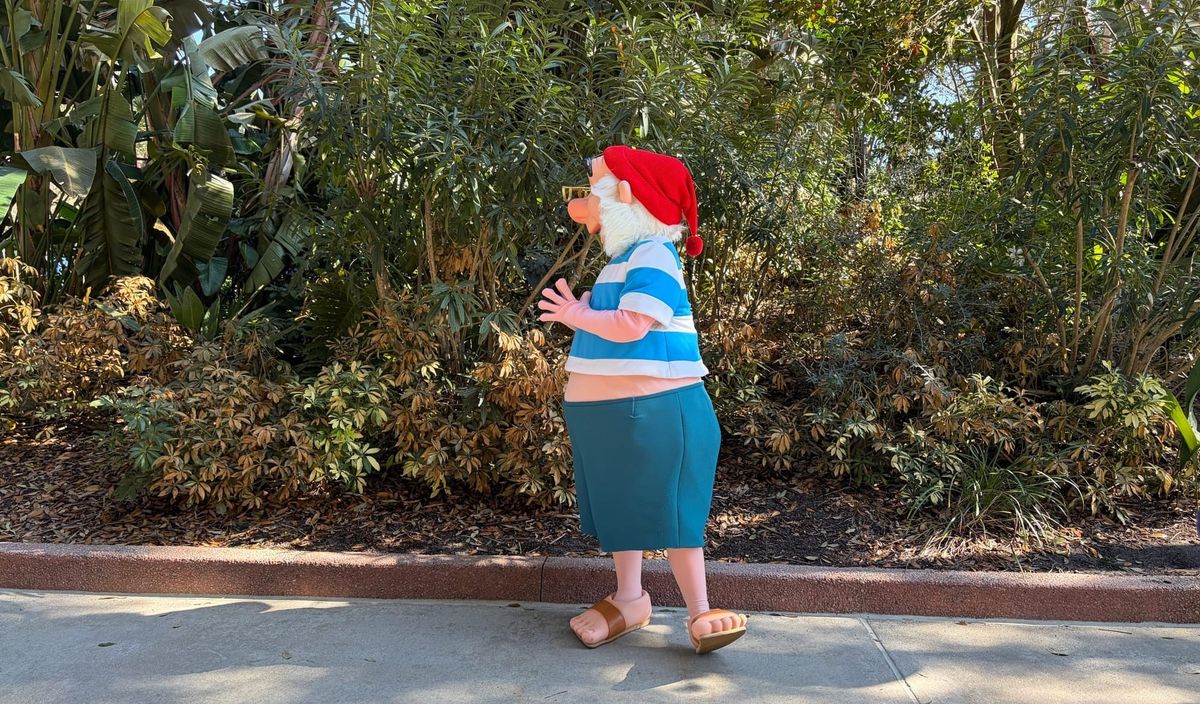
- Late January or early February is a good time to visit Disney World. Flights are cheaper (especially if you fly on weekdays) and hotels seem a little less expensive. Lines may be slightly shorter but they are never short. There may be no hack for short lines other than paying money. The real benefit of traveling in the winter is access to hotel pools, which seemed quiet.
- The secondary benefit is weather. We arrived during one of the coldest (by local standards) weeks of the year and it was perfect. Light rain and 50s, pure sun on other days. Waiting in line with subtropical heat seems miserable.
- Age 6 to 11 is the perfect age for children. Any younger and they are too short for rides; any older and they are too cynical and self-aware.
- ChatGPT had good details but failed on two important topics. This information would’ve been readily available if I read a single blog or website. Lesson: check institutional websites for frequently changing knowledge. LLMs get confused when there is effusive, fast changing information.
- A massive amount of talent, resources, and money is invested in the parks. Families plan months, years out to make the pilgrimage. Children watch the characters, study the texts in advance, like a religious journey. Unlike religion, Disney only offers pure distraction from life, not a path to reconcile with metaphysical reality.
- The parks are a 30 minute drive from the airport. There are no sidewalks to connect the resorts or the parks. There are no bike lanes. There are fences that block possible shortcuts through woods or golf courses. A driver told me that Disney has the highest pedestrian mortality rates in the country.
- Parking lots are vast, Sahara-esque places and the mobile app has a car location service.
- Walking is commodified — the only place you can do it properly is within the gate.
- The Main Street experience, pedestrian only, with a density of shops, is rare in the United States, but central to Disney’s Magic Kingdom.
- There is a gondola, which is far more expensive than installing bike paths. To arrive at Magic Kingdom, you are forced to take a boat or monorail. The benefit is experiential, not practical. A short rideshare costs between $20 and $40.
- All food is expensive. Epcot has good snacks, but the food is overpriced. It is better than carnival food and the higher end restaurants are quite good. Even for good food stalls (wagyu beef dumplings), the lines are much too long. Preparing your own food via grocery delivery is strategic but difficult.
- Coffee is hard to find, overpriced, and lines are long. I brought an aeropress, a 20oz mug, and freshly ground coffee for four days. 16oz hot water, 27 grams beans.
- Before I arrived, I got several communications about upgrades. Surge pricing is applied to almost everything (hotels, airlines, tickets). Disney does not upsell their skip-the-line tickets. It is difficult to understand how they work and they often change. Paying for and waiting for lines is the most controversial topic I heard discussed. Reservations are recommended for almost all sitdown food, including bars.
- Paying extra for a Disney resort gives you early access to the parks and early access to fast line tickets.
- If air was commodifiable, Disney would sell Buzz Lightyear themed oxygen tanks.
- The highways are spotless and there are no billboards, except for Disney. Later, I thought of the cemetery along the BQE and how misplaced such a memento mori would feel along the road to the parks.
- As a “city” (it’s not a city), Disney owns the region. All decisions lead to a positive, predictable, profitable guest experience.
- It is probably the best run “city” in the world, outside of Switzerland or Singapore. American city officials should visit the parks and take notes. A formal training program would benefit our cities.
- In the case of Disney as a municipality, hierarchical control is top down and ensures a quality experience. In cities, control is distributed to citizens, which results in a more chaotic, unpredictable quality. At Disney, citizens vote with the dollar.
- Everything is artificial, even the fire houses are decorated with giant red bricks, but I think of Rick Rubin, who might say that it’s actually more real than a real city.
- Within the parks, one’s spatial understanding is manipulated. Landmarks like the Castle become cardinal directions, you can’t see outside the park, roller coasters are hidden in giant warehouses but they are cleverly disguised.
- It is common to see children tethered to leashes like pets. One family told me they had airtagged all of their children (they had four). I suspect that Disney World is one of the safest places on the planet. If something were to go wrong, EMTs would arrive swiftly. Heat exhaustion and nausea are probably common.
- A sense of being watched permeates the parks. I did not see any security cameras, but there was a general sense that this was not a place to mess around. My son climbed a fence to get a better view of the parade and I knew someone would reprimand him, which is exactly what happened in moments. It’s very different than Chicago, which has a feeling of no one watching.
- I did not see any liquor stores or cannabis shops. At the Magic Kingdom, alcohol was scarce (intentionally) and difficult to find. Whatever money they lose on alcohol sales they likely make up by sustaining a safe and sober environment. At Epcot, alcohol was much more accessible.
- Line length is a decent indicator of how fun a ride might be, but not always. Capacity or visitor flow sometimes creates logjams and the line length does not reflect quality.
- Epcot may have once been about intentional community planning but very little, if anything, is left from that vision.
- Action rides, which are the most popular rides, are designed for adolescent boys and their fathers (Tron, Aerosmith, etc), but fun enough for teenagers.
- I saw multiple people wearing shirts mocking the high visitation fees being worn by people who also paid money for t-shirts to explain how they don’t like paying for things.
- Everything is clean. Streets are powerwashed every night. Garbage cans are camouflaged to be the same color as the sidewalks.
- Bathrooms do not have mirrors above the sinks, only standing mirrors near the exits. I suspect this is to encourage a quick visit. Also, one less thing that can get dirty?
- Sound is everywhere but speakers are hidden. Even the bathrooms have music, which matches the theme of the attraction.
- Outside of music and the sound of people, the park is very quiet. The monorail sounds like the future. Very different from the sound of trains in NYC or Chicago.
- Staff carry small toys or bubbles in fanny packs. Nametags also specify where the employee is from. All uniforms are themed to the attraction.
- The parks are a pastiche of styles but it works because the Disney brand adapts to all cultures and periods.
- There was a high school cheerleading event, which brought 30,000 cheerleaders from all over the US to Orlando. One dad told me that they all like to drink sugar free Red Bull. Nearly all of them had matching team themed apparel. I overheard a woman say that they perform for about 2 minutes in total.
- I am reminded, of course, of DFW’s A Supposedly Fun Thing I’ll Never Do Again. If you overthink it, the Parks are a giant mirage to distract us from thinking about death.
- The majority of visitors wear graphical t-shirts. Many of them have brand mashups that require a cultural literacy to interpret — Friends x Baby Yoda, Wall-E x Van Gogh, Breaking Bad x Walt Disney.
- The parks are designed for groups of four, the typical nuclear family. The century of progress makes Walt Disney’s focus on families very clear. Most rides are designed for four people. I observed many families of three.
- Staff all take their jobs seriously. Many seem to be retired from other professions and take service jobs because they like Disney and do not like idleness.
- Many people do not want to be retired and yet we hold retirement as a cultural goal. I think the entire enterprise of retirement is flawed and we should have a more gradual transition that keeps older people productive and socially engaged.
- I saw a man wearing a black hat with white lettering that said “Retired.” He was sitting in a tube at a lazy river at the resort.
- Mickey is the icon, yet appeared in no major movies other than Fantasia. Is Mickey the icon because of Steamboat Willie? There is likely much more Mickey representation in television that I have not seen.
- The Mickey logo is perfect. It looks nothing like a mouse, which is an animal that most humans do not like. It only looks like itself.
- I wonder if the logo circles are pure geometric circles or if they have slight radial variations.
- Waiting in line is a good opportunity to speak with people. Almost anyone (especially Americans) will be happy to speak with you and show you pictures of their pets (or, in one case, an alligator in their suburban neighborhood). It makes the time in line go much faster.
- There is no cold tap water to be found in Orlando, at sinks, or in showers.
- At the beginning of Bob Iger’s autobiography, there is an alligator who attacks and kills a young child. There is something metaphorical about this narrative.
- Muffins are easily found in Orlando, like all American cities. Muffins are cake for breakfast. I do not like muffins.
- Vacations, or the idea of a “vacation,” strikes me as a relatively recent ideology. For Americans, they are done in extended durations, typically a week, with a strong focus on “relaxing” and doing very little. All-inclusive holidays are popular, an experience where no decisions need to be made. I find a lot of joy in researching travel and find it difficult to understand the pleasure of a fully catered trip. Cancun is the #1 international travel destination in most American states.
- I hear the Iz song “Over the Rainbow” in vacation destinations and advertisements and it has become an anthem for warm-weather holidays.
- Disney is not a place for cynics.
- I saw a sign placed near a dead plant that said “please pardon our appearance, we had a visit from jack frost.” Apologizing for a dead plant and having a copywriter who says it in a Disney-esque way is an exceptional attention to detail.
- Everything is intentional. Fans, which are common in line, are themed to the attraction and blend in with the scenography
- When did Lazy Rivers become popular? I think they are great and a welcome alternative to rectangular pools. Unless, of course, you are doing serious swimming.
- My favorite trips have a high density of change encounters, each leading to spontaneous new developments. Disney, done well, has the right formula.
- SCAD’s location near Orlando was smart and I suspect that their success over the last 50 years is intertwined with the success of the Parks (and, more recently, the success of the entertainment industry in Atlanta).
- Cast members are trained to offer “pixie dust” which may turn into free passes or a gratis Slushy.
- Everything is in motion. Characters spontaneously appear, a marching band walks down the street, bubbles float over the paths, visitors are ushered from ride to ride.
- Other attractions are likely more thrilling, but Disney has a narrative layer that gives it a clear competitive advantage. It also has a family nostalgia factor that is now multigenerational.
- Every time I thought I would find a dusty, forgotten corner of the park, I was wrong. Everything is up to date and high quality. Older experiences have been updated with fresh scripts and songs. The filler Mickey cartoon in Hollywood studios is one of the best stops and very underrated.
- Animatronics are still functional and updated. This is very very hard to do. Very few places do it well without it being cringe.
- Paid advertising never found me through social media but maybe that’s because they don’t have to advertise. Organic word of mouth is comprehensive. FOMO among parents and children is very real.
- One could study the architectural design of gift shops and learn a lot about retail. The lines for the cash register are corridors with shelving that display smaller price tag products. Small Groot dolls are $27.99. With very few exceptions, the Disney branding is comprehensive. Even the chocolate pretzels are branded. The Japanese pavilion had live oysters with pearls that one could buy for $34.
- How many SKUs in total? My guess is 20,000 on the low, over 40,000 on the high. How much real estate is dedicated to retail? Maybe 30% in total, but it’s the best positioned real estate.
- Thrift stores in the Orlando area are probably great.
- I overheard more cursing than I would’ve expected in a PG-focused destination. Indication that cursing is more accepted? Class indicator of a subset Disney clientele?
- Disney experiential design is maximalist but seldom feels too busy. The physical volume of space is creatively choreographed. With animatronic shows, objects emerge from the ceilings and the walls. At the Ratatouille attraction, the wallpaper is custom designed with characters from the movies. The vertical space of the skyline is populated with landmark silhouettes and at night, fireworks fill the space.
- The parks are optimized for memory. Characters, spatial design, smells, narrative, icons, novelty (a train that goes through a hotel?). I remember many elements from my childhood (over 30 years ago).
- On the way home, I ordered food from our plane and it was delivered to our doorstep. We arrived late, took a car, and did not have time to drive to a grocery store.
- Time seemed to go both very quickly and very slowly. We visited for 3 days.